Vol. I · No. 10

The Driftlss Journal

Thursday, May 14, 2026 · Insights for therapy practice growth

More from the Journal

AI · 13 min read

AI Visibility for ABA & OT Clinics: How We Got Two Healthcare Clients Cited #1 and #2 Across ChatGPT and Google AI

If you run an ABA clinic or an OT practice, the way buyers find you has already changed, and most marketing agencies have not caught up. A parent looking for therapy services or a clinic owner shopping for vendors does not always start at Google anymore. They open ChatGPT or rely on Google AI Overviews, and they get a recommendation served up before they ever scroll to a list of organic results.

Read moreApril 27, 2026

AI · 7 min read

We Tested 99 Health Websites Across ChatGPT, Claude, and Google AI Overviews. Here's What We Found About WordPress vs Next.js.

AI is eating search. Google AI Overviews now sit above organic results for most health queries. ChatGPT and Claude are becoming the first place people go to find a doctor, choose a fitness app, or compare telehealth platforms. The question every health brand should be asking isn't "how do I rank on Google?" anymore — it's "how do I get cited by AI?"

Read moreApril 9, 2026

Marketing · 3 min read

Why 73% of Parents Judge Your Practice by Your Website

Your website is the first thing parents see — before they ever call your office, read a review, or ask a friend. And in 2026, that first impression carries more weight than a personal referral. A recent study found that 73% of parents form an opinion about a therapy practice within seconds of visiting their website. If the site looks outdated, loads slowly, or feels confusing, they leave. They don't call. They don't email. They just move on to the next result.

Read moreMarch 28, 2026

SEO · 3 min read

What is GEO and Why Your Practice Needs It

The way families find therapy providers is changing fast. Google is still important, but a growing number of parents are turning to AI-powered tools — ChatGPT, Google's AI Overviews, Perplexity, and others — to research care options for their children. This shift has created an entirely new discipline: Generative Engine Optimization, or GEO. And if your practice isn't thinking about it, you're already falling behind.

Read moreMarch 25, 2026

AI · 4 min read

The AI Chatbot Playbook for Therapy Practices

Every therapy practice has the same problem: parents have questions at 9 PM on a Tuesday, and your front desk closed at 5. Those unanswered questions don't wait. Parents move on, find another provider, or simply give up on getting help for their child. AI chatbots solve this in a way that wasn't possible even two years ago. Not the clunky, scripted bots from the early 2020s that could barely handle "What are your hours?" — modern AI assistants that genuinely understand what a parent is asking and provide helpful, accurate responses.

Read moreMarch 22, 2026

Web Design · 3 min read

5 Website Mistakes Every Therapy Practice Makes

After reviewing hundreds of therapy practice websites, the same problems show up over and over. These aren't minor design preferences — they're conversion killers that cost practices real patients every month. Here are the five most common mistakes and how to fix each one. The most critical real estate on your website is the top of the homepage — what visitors see before scrolling. Most therapy practice sites waste this space with a generic welcome message or a stock photo slideshow.

Read moreMarch 15, 2026

Marketing · 4 min read

How to Showcase Your Team Online

When parents are choosing a therapy provider for their child, the team page is often the most visited page on the entire website — right after the homepage. Parents aren't just looking for a practice. They're looking for a person they can trust with their child. Most therapy practice websites treat the team page as an afterthought. A headshot, a name, a list of credentials. Maybe a sentence about interests outside of work. That's a missed opportunity.

Read moreMarch 12, 2026
Who it serves

A journal for therapy practices should still feel rooted in the real world of those practices

The visual language around the content matters because it tells readers whether the advice comes from real category understanding or generic marketing writing.

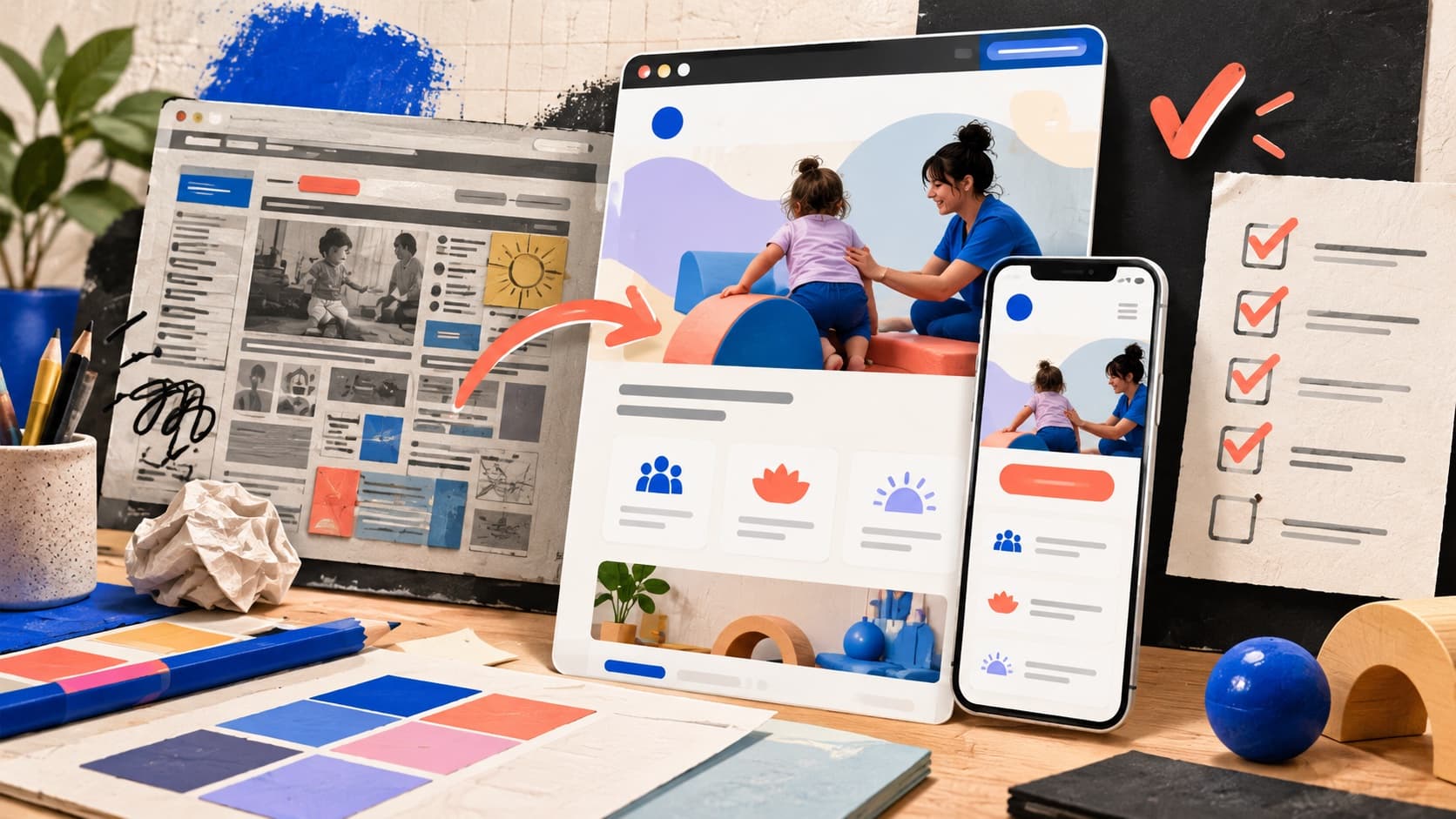
A team that looks coordinated and capable

Strategy, systems, and collaboration are easier to believe when the visuals support that story.

Editorial polish

Content earns more trust when the environment around it feels premium and considered

A strong blog page should feel like part of the same growth system as the rest of the site, not a disconnected library.

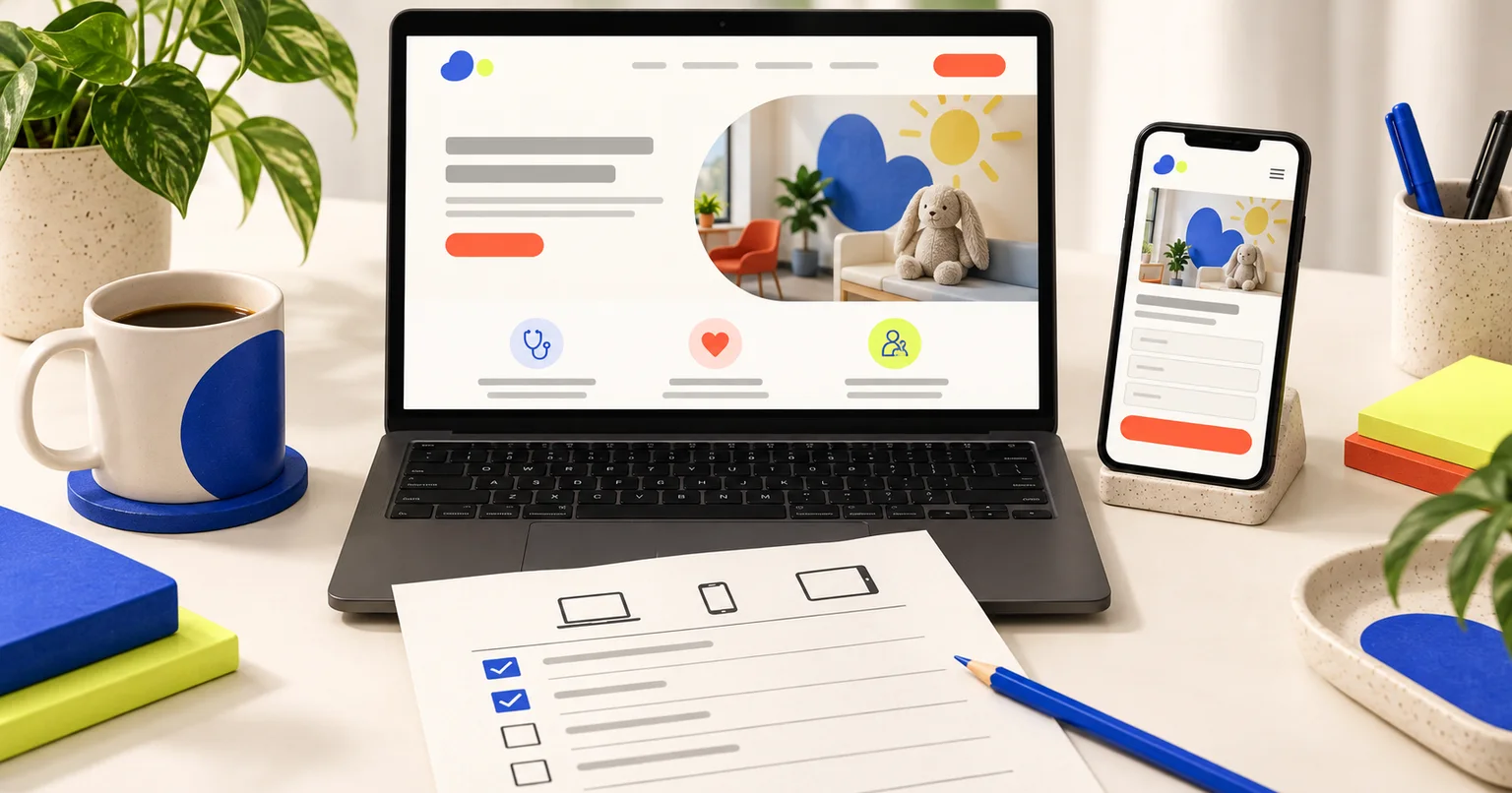
A polished presentation that feels premium

Device-forward imagery helps sell clarity, quality, and design confidence without adding clutter.

Subscribe to the Journal

Practical growth tips for therapy practices, delivered weekly. No spam.

Practical growth

The best articles feel useful because they connect ideas to something measurable

Supporting visuals can quietly reinforce that the writing is grounded in real execution, performance, and category experience.

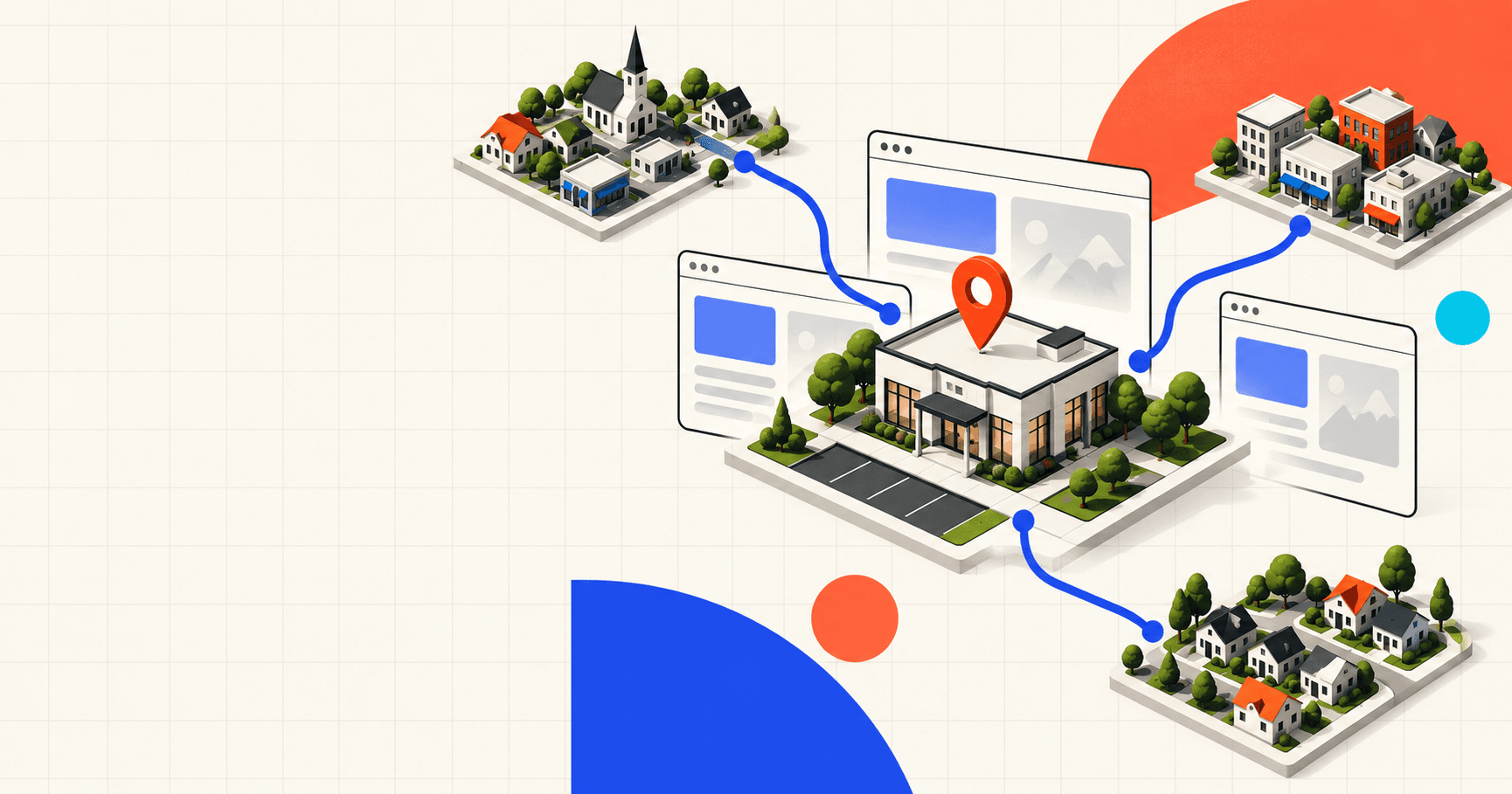
Visibility shown in a way that feels concrete

Analytics visuals help SEO and AI visibility pages feel strategic rather than vague.

Real environment

Even a content hub should keep pointing back to a practice families can picture clearly

That connection makes the journal feel more relevant to operators making real decisions, not just browsing inspiration.

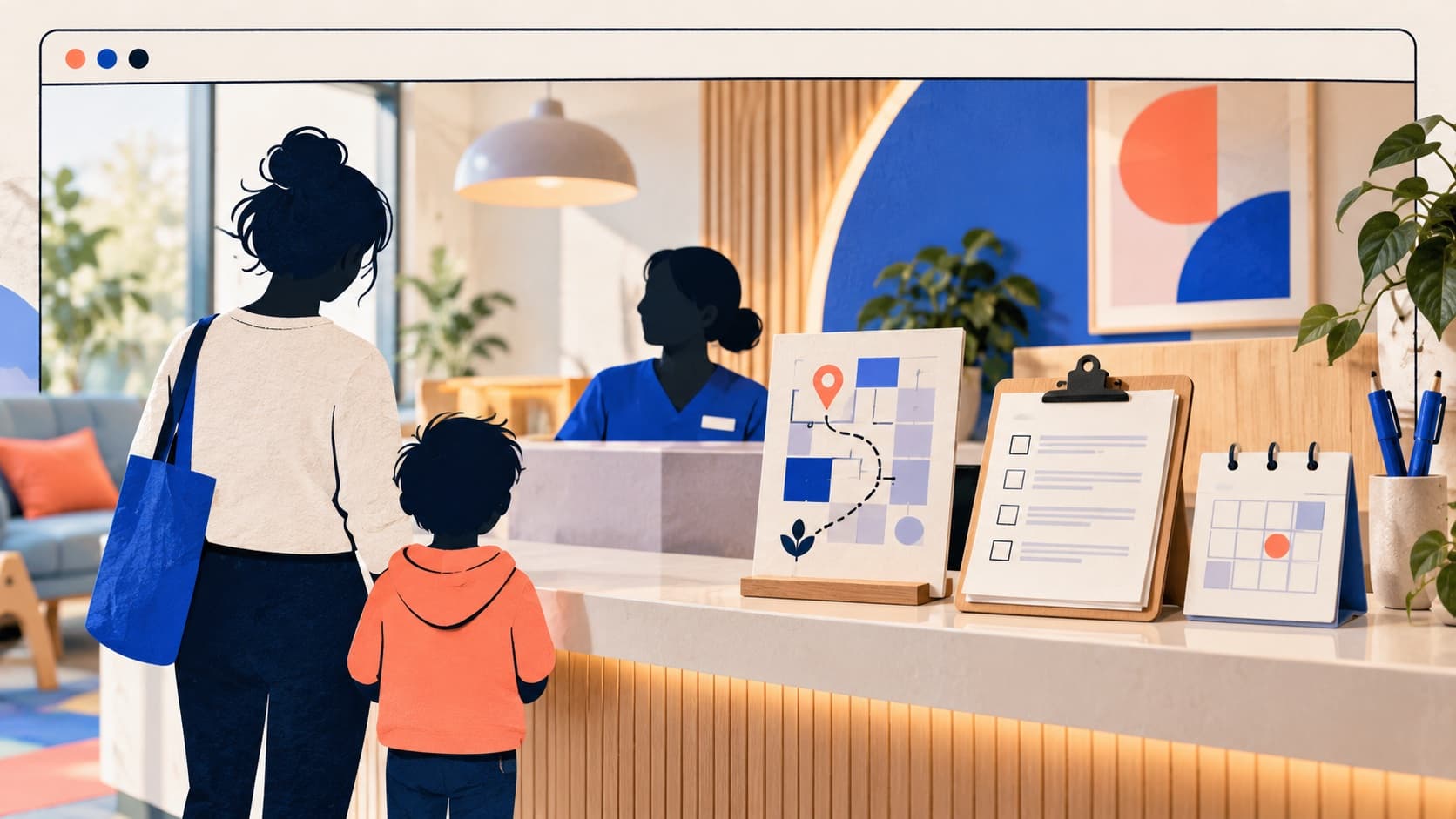
A space parents can trust at a glance

Environment shots create confidence quickly and make the practice feel real before anyone picks up the phone.