Explain the everyday difference
Organize pages around the areas your clinicians actually support, such as play, school participation, self-care, and sensory needs. Your team reviews the language so marketing stays true to your practice.
Driftlss / Occupational Therapy
Driftlss provides occupational therapy website design for pediatric practices, connecting clear service pages, therapist introductions, local search, and inquiry workflows around the way your team works.
Driftlss / Built around Occupational Therapy
Families may know the everyday challenge they want help with before they know what occupational therapy offers. Your website needs to explain your services in familiar language and help referral partners find the information they need.
Driftlss builds clear service pages, therapist introductions, local search foundations, and inquiry paths around your pediatric OT practice. Your clinicians guide the care information while we shape how people discover and navigate it.
Our work brings design, content, and inquiry handling into one project. Families can learn about your approach, see who they will meet, and understand how to contact your team without piecing the story together themselves.
Let's talk / Occupational Therapy
The strategy / Occupational Therapy
Organize pages around the areas your clinicians actually support, such as play, school participation, self-care, and sensory needs. Your team reviews the language so marketing stays true to your practice.
Connect location pages, your Google Business Profile, and parent-focused search content. Show where you work, the ages you see, and whether services happen in a clinic, school, or home.
Give families a clear explanation of referral requirements, insurance questions, and what to expect from an evaluation. Route inquiries to the right person without making parents repeat themselves.
Selected work / The Driftlss portfolio
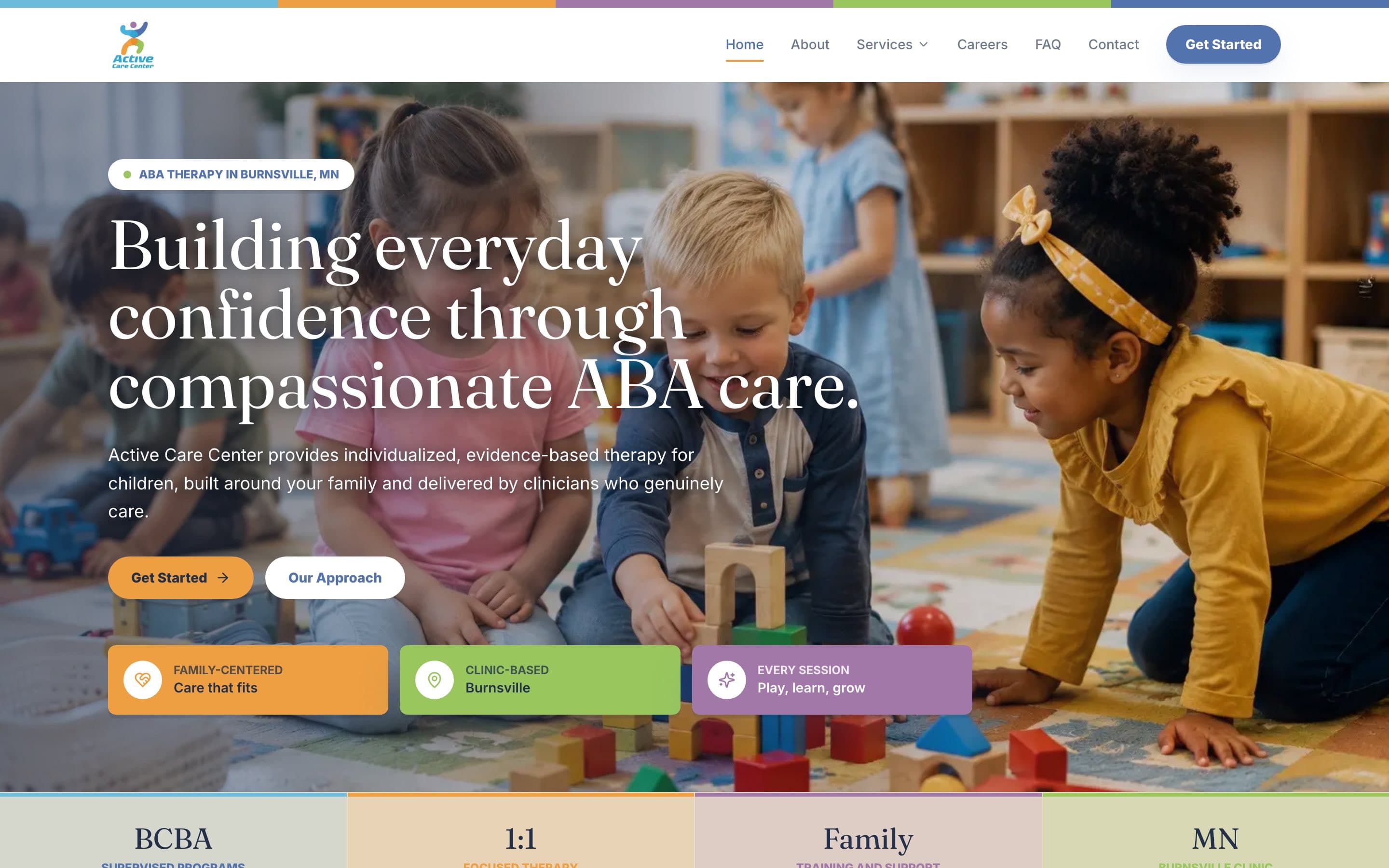
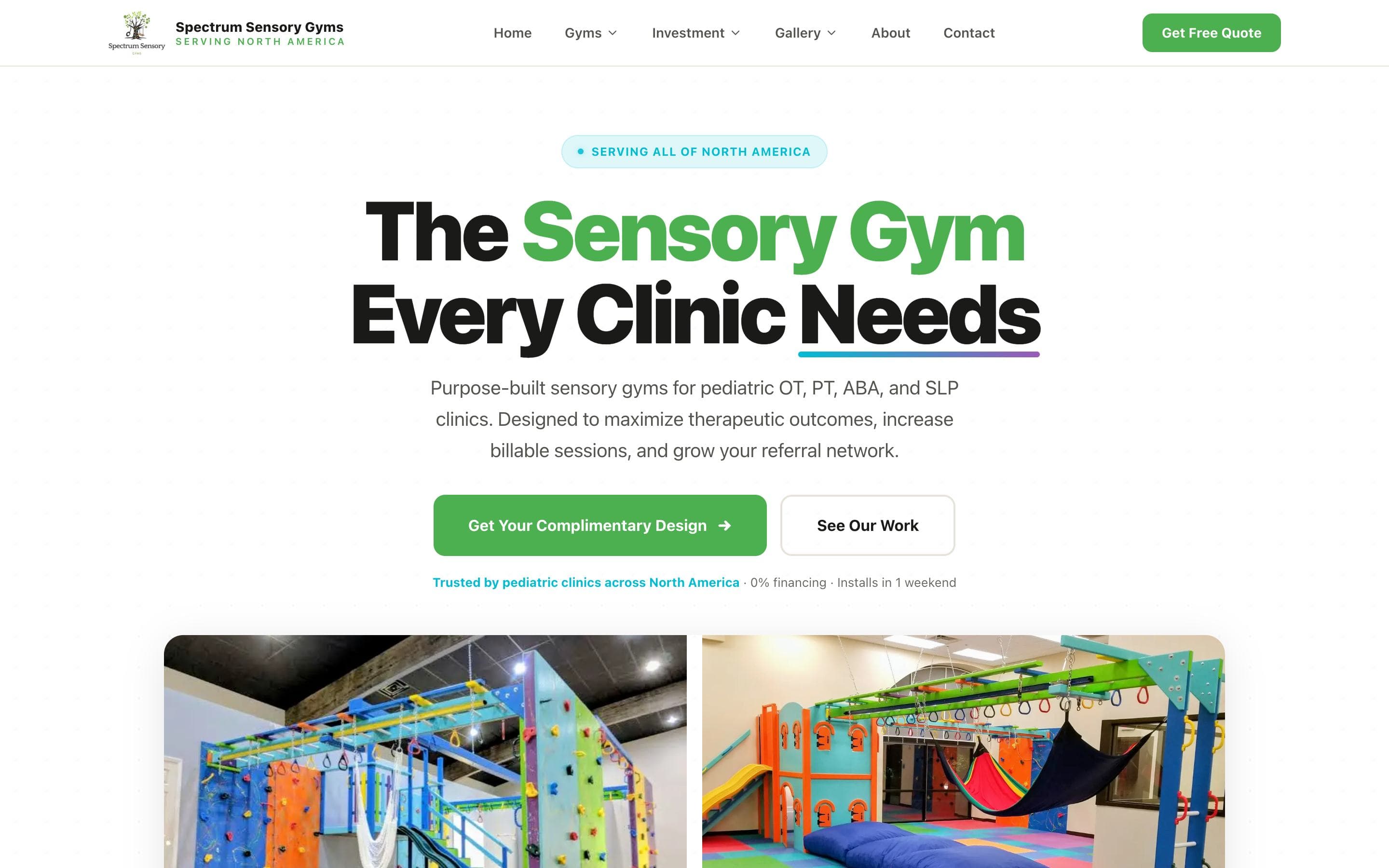
A look inside our ABA and sensory-space portfolio. Explore how each website brings a business’s personality, offering, and next step together.
A warm introduction to the practice, with clear service information and a path for families to get in touch.
Notice how the people, services, and next step sit together in one approachable experience.
A visual website for custom sensory spaces, helping a buyer explore the work and understand a project before reaching out.
Project imagery and a virtual tour give a complex offering a useful, tangible introduction.
The thinking behind the work
01The family decision
Occupational therapy website design starts with the questions your front desk hears. A parent may recognize a difficulty with getting dressed, joining play, or participating at school without knowing which service to ask for. We organize your approved service information around those practical questions, then connect it to the therapists and appointment options behind it.
A useful service page explains whom you see, where sessions happen, and what the first conversation involves. Your clinicians set the language and review the details. Real photographs, clear navigation, and readable mobile layouts help families explore the practice without having to interpret a wall of clinical terminology.
02A manageable workflow
An occupational therapy private practice may have one person managing both appointments and website updates. We begin by identifying what changes often: therapist availability, accepted ages, location details, and referral instructions. The project scope should make those updates manageable for the people responsible for them.
Occupational therapy practice management also shapes the contact path. We review which administrative details belong on the website and where a secure clinical system should take over. A marketing inquiry can be routed to a named team member without turning the public website into a clinical record.
03Local relevance
We start by reviewing your service pages, Google Business Profile, and search data to identify gaps in how people find and understand your practice. That includes checking crawlability, indexing, and mobile performance, then prioritizing page improvements and local-information corrections.
For illustration, a single-location pediatric OT practice might need a core occupational therapy page, therapist profiles, a clinic page with arrival details, and a first-visit guide. Those pages would link to one clear inquiry route. A separate service page belongs in that plan only when the practice offers the service and has useful, specific information to share.
Your team confirms ages served, appointment settings, referral instructions, and the person who will review the copy. We use that material to build an accurate page plan and connect supporting articles to the relevant service. This is an example structure, not a client project or measured result.
04Show the setting
A photograph of an OT space becomes more useful when the page explains what a family is looking at. We plan photography alongside the content so the rooms, equipment, and team introductions support a clear account of your practice. Captions use language your clinicians approve and describe the setting without implying that every child will follow the same course of care.
Before a shoot, we identify the pages that need images and prepare a practical shot list. An entrance photograph may help explain arrival, while a wider view can introduce a treatment room. Your practice decides which people and spaces can appear, and we can build a useful visual introduction from empty rooms and staff photographs when patient images are unavailable.
The work / Connected from the start
From the first search to the next conversation, each part has a job to do. We build the website, content, and follow-up around the way your team works.
A clear first impression
Custom design, useful service pages, and an introduction to your people, with a clear way to get started.
Be easier to find
Local search, useful content, and technical SEO built around the services you actually offer.
Reach the right people
Paid campaigns matched to your audience, service area, and business goals.
Keep the conversation moving
Inquiry routing and follow-up workflows that give your team a clear owner and next action.
Share your expertise
Articles that answer real questions, with your team reviewing the information before it goes out.
A familiar presence
A content plan, edited video, and scheduled posts that introduce your team and its approach.
Start with what your practice needs now. We agree on the pages, channels, and ongoing support before the work begins.
Before we start
Yes. We interview your team, use the language families understand, and have your clinicians review service descriptions. We explain your approach without promising a particular outcome for a child.
We first review the pages, navigation, and contact experience you already have. If the site supports your goals, the scope can focus on clearer service information, therapist profiles, and easier inquiry steps. A rebuild is a separate decision based on what the current platform can support.
Each setting should have a clear description of where services are available, who they serve, and how to ask about eligibility. Your team supplies those details so families and referral partners can find the relevant information without assuming every service is offered in every setting.
Useful starting materials include your service list, age groups, locations, therapist biographies, approved photos, and current referral process. We identify missing information early and agree on who will review the content before it is published.
Yes. We can create distinct pages and campaigns for the services you actually offer, with local relevance and intake paths matched to your current capacity.
Last updated
Field notes / Further reading
Useful answers for practices deciding what to fix next.
Start a project / Your OT practice
Bring the service questions you hear most often, the pages that need attention, and the next step you want your website to make clearer.
Let’s talk about your project