Most websites are built to be looked at, so they get judged on how they look the day they launch and then quietly stop pulling their weight. We build them to work, which is a different job with different priorities, because a site has to keep bringing in the people who need what you offer long after the launch-day screenshots stop mattering. Someone searching at nine at night for a provider, a contractor, or a clinic gives each option only a few seconds, and the way a site is built decides whether yours is the one they find, the one that loads before they lose interest, and the one that answers them well enough to earn the call. Here is how we build for that, and what each choice is actually doing for you underneath the surface.
The foundation, and why it stays standing
We build on Next.js with TypeScript, style it with Tailwind, and host it on Vercel, which together give you a site made of clean, modern code with far fewer moving parts than the plugin-stacked WordPress builds most agencies still hand over. The benefit you feel day to day is stability, because a site with fewer bolted-on pieces has fewer things that can break when something updates, which means fewer of those mornings where a page goes down for a reason nobody can quite explain. It also means the site keeps behaving the way it did on day one instead of slowly degrading as a dozen plugins fall out of date and start fighting each other. You are getting a foundation built to hold up for years rather than one that needs a specialist on call to keep it running.
Explore our custom website design service for a closer look at how we plan the structure, content, and next steps for each business.
Getting found, by Google and by AI
Being visible online used to mean ranking on Google, and we still do all of the groundwork that makes that happen, including canonical tags, sitemaps, Google Search Console setup, and the structured markup that tells search engines exactly what you do and where you do it. What has changed is that a growing share of people now ask ChatGPT or Google's AI overview for a recommendation and act on the short list it reads back to them, which means there is now a second front door you have to be standing in front of. We have tested this across enough real sites to know the build itself moves the needle here, because cleaner and better-structured code is far easier for these models to read and quote, and we have watched client sites land among the first names an AI recommends in their market. Most sites are effectively invisible to these tools because their code is a tangle the models cannot parse, so building on a readable foundation is quietly one of the highest-leverage things you can do to get found at all.
Speed, and what a slow page costs
Vercel serves your pages from the location closest to whoever is visiting, and we render as much of the site as possible ahead of time, so it arrives almost immediately instead of assembling itself while someone taps their foot. Speed pays for itself in a way that is easy to miss, because a visitor weighing a few options will abandon a slow page before your services, your team, or your reviews ever finish loading, and every second you save is another second of their attention spent on the thing you actually want them to see. The same clean structure that loads fast for a person is also the structure Google and the AI models reward, so the benefit compounds in both directions at once.
A site your own team can run
One of the most common frustrations we hear from owners is that they are locked out of their own website, stuck paying for or waiting on every small change. We build on Sanity, a content system that lets your team update hours, add a staff member, swap a photo, or post an announcement through a simple editor without touching a line of code or waiting on us. Anything that collects real information, like a booking form or an intake request, runs on Supabase, so the data your site takes in is stored and handled properly rather than emailed around and lost. You own the site and you can operate it, which matters most on the day something needs to change right now rather than whenever a developer gets to it.
Built to stay up and stay trusted
For most people your website is the first proof that you are real and safe to hand money or personal information to, so it cannot look broken and it cannot go dark. We run DNS and security through Cloudflare, host on infrastructure built to stay online when traffic spikes, and set up your email authentication properly with DMARC, SPF, and DKIM so the messages you send reach inboxes instead of spam folders and cannot easily be faked by someone impersonating you. These are the parts of a build that nobody notices when they are handled well and the only parts anyone remembers when they are handled badly, which is why we treat them as part of the job rather than an upsell.
What it adds up to
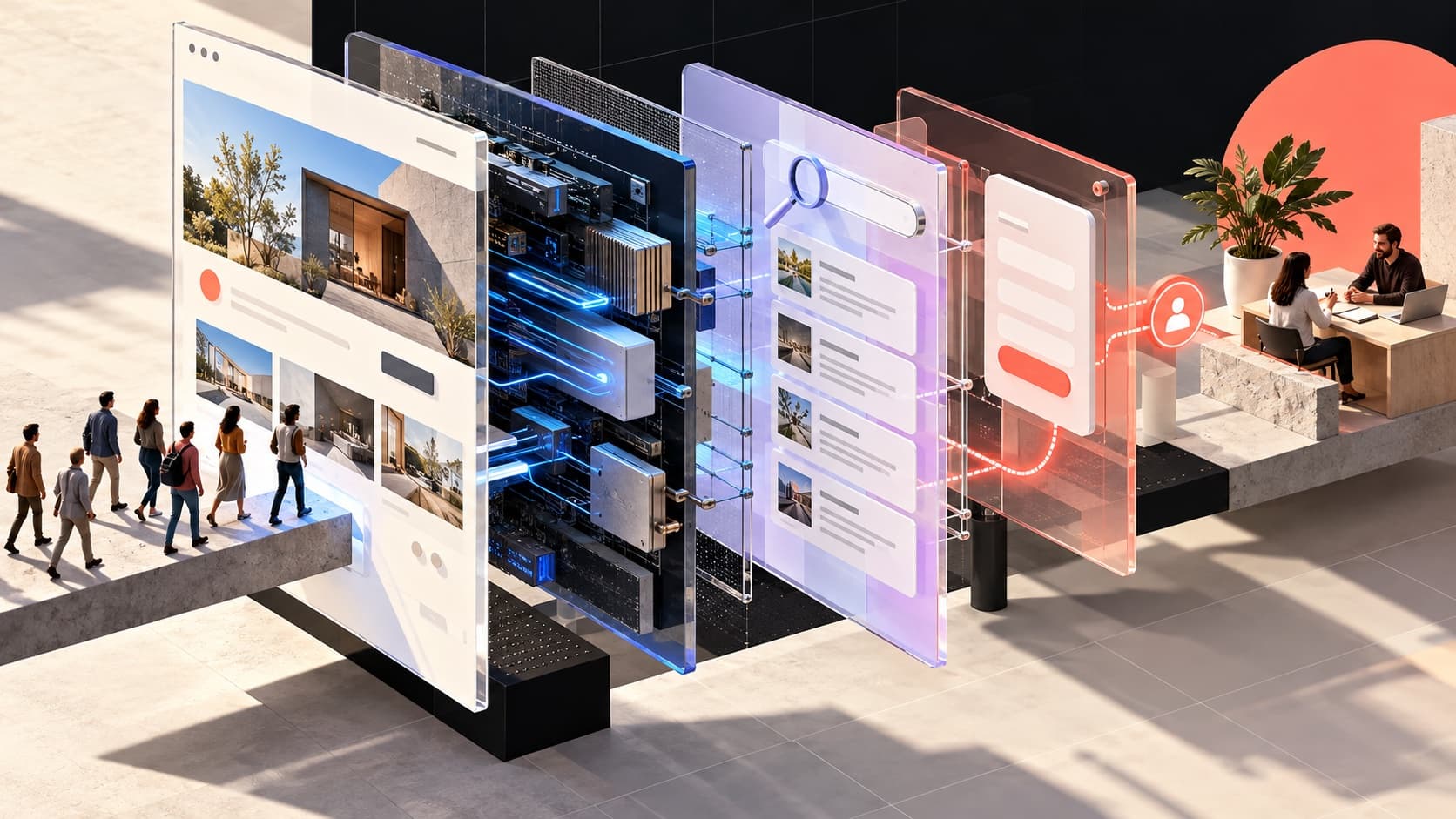
Every one of these choices disappears behind the finished site, and that is the point, because the visitor should only ever experience the result: they find you when they go looking, the page opens before they lose patience, it reads clearly enough for both people and AI to trust, and it turns a late-night search into a booked call. Built this way, a website stops being something you pay for once and starts working like a member of the team who brings in business while you get on with running the place. That is the standard we hold every build to, because a good-looking site that nobody can find and nobody can use is not worth much, and it is the reason we build the way we do.